
Quick overview — what you’ll learn
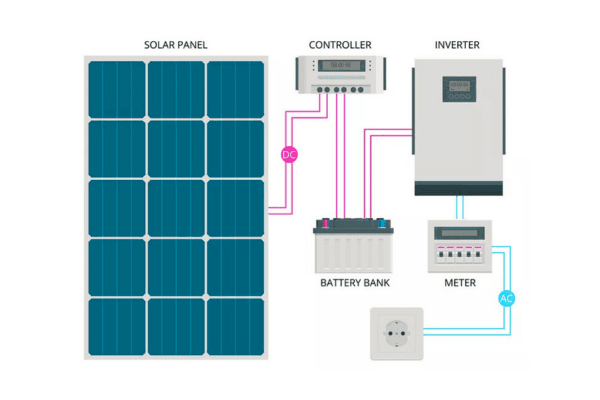
What a solar battery system is and the key components
How energy flows between solar panels, a battery, your home, and the grid
The main battery chemistries and what to consider (capacity, discharge, cycles)
How a battery saves you money in Melbourne (and when it might not)
Current rebates and programs that lower upfront costs in Victoria and nationally.
A step-by-step Melbourne-focused buyer’s checklist and installation tips from Power Smart Co
1 — What is solar battery storage?
Solar battery storage (often called a “home battery” or “battery storage system”) stores electricity generated by your rooftop solar panels for use later. Instead of exporting all your daytime excess solar to the grid (often at a low export rate), the battery captures that surplus and dispatches it when you need it — in the evening peak, overnight, or during a blackout.
Benefits at a glance:
Use more of your own solar energy (self-consumption).
Reduce grid electricity purchases during expensive peak times.
Provide backup power during outages.
Increase household energy independence and cut carbon footprint.
These benefits are especially relevant in Melbourne where household electricity tariffs, time-of-use pricing, and solar uptake all make storage attractive for many homeowners. Recent federal and Victorian programs have also made batteries more affordable — see Section 6 for rebate details.
2 — The core components of a home solar + battery system
A typical residential system has four core parts:
Solar panels (PV array) — capture sunlight and convert it to DC electricity.
Inverter(s) — convert DC (from solar/battery) to AC for household use. Modern setups use a main inverter or separate hybrid inverter that manages both solar and battery flows.
Battery (or battery bank) — stores DC energy. Commonly used chemistries include lithium-ion (most popular), lead-acid (older/cheaper), and newer flow or solid-state types emerging.
Battery management system (BMS) & controller — protects the battery, manages charging/discharging, and communicates with the inverter and often with a cloud/monitoring portal.
Optional extras:
Backup switch or critical-load panel — isolates essential circuits to run during blackout.
Electric vehicle (EV) charger integration — use stored solar to charge EVs.
Energy management software / smart meter — schedules charging/discharging and provides monitoring.
3 — How electricity flows: step-by-step
Understanding the energy flow is the quickest way to understand “how batteries work” practically. Imagine a sunny Melbourne day:
Solar generates electricity: Panels produce DC power.
Instant household demand is met first: If your home is using power (e.g., fridge, lights), the solar power supplies it directly.
Excess solar charges the battery: Once household load is satisfied, surplus flows into the battery (through the inverter’s DC-charging pathway).
Grid export or curtailment: If the battery is full and there is still surplus, excess can be exported to the grid (you may get an export credit, often low), or the inverter can curtail production.
At night or during high-tariff periods: The battery discharges to meet home demand, reducing import from the grid.
During an outage: If wired with a backup switch and configured for backup, the battery can power selected circuits (fridge, lights, medical equipment) until depleted.
Most modern systems let you set operating modes (maximise self-consumption, maximise backup charge, time-of-use arbitrage, etc.). A smart installer configures the default mode to match your goals.
4 — Battery specifications explained (what matters most)
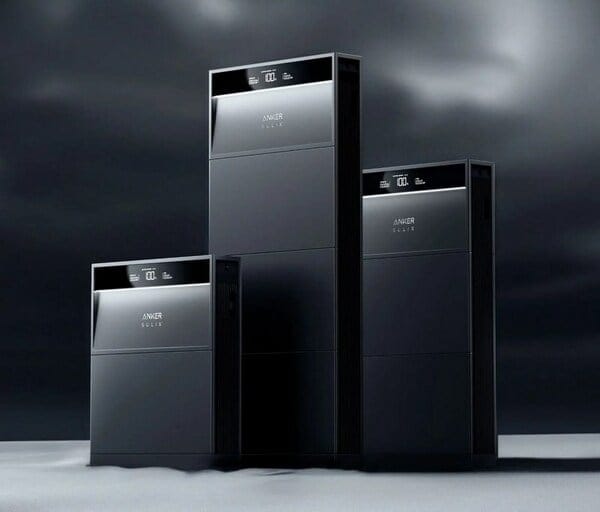
When comparing batteries, focus on these key specs:
Usable capacity (kWh) — the energy you can actually use. A 10 kWh battery with 90% usable depth delivers 9 kWh of usable energy.
Round-trip efficiency (%) — energy retained after charging and discharging (higher is better). Typical lithium batteries: 85–95%.
Power rating (kW) — how much power it can deliver at once. This determines whether it can run heavy appliances (dishwasher, oven, heat pump).
Depth of discharge (DoD) — how much of the battery’s capacity you can safely use regularly. 80–95% DoD is common in lithium batteries.
Cycle life / warranty — number of cycles or years guaranteed before capacity falls below a threshold. Look for 10-year warranties or warranties guaranteeing a certain kWh throughput.
Battery chemistry — Lithium-ion (NMC, LFP) dominates. LFP (lithium iron phosphate) is known for longer life and safety but slightly lower energy density; NMC has higher energy density but shorter lifespan and more thermal sensitivity.
Scalability & modularity — ability to add more battery modules later.
Backup capability — some batteries are designed to seamlessly provide backup; others need extra hardware.
For Melbourne households, a practical rule of thumb is to size battery capacity based on evening consumption and rooftop export patterns — many households choose between 5–15 kWh, with 10 kWh being a common sweet spot for families wanting meaningful evening coverage. But sizing should always be based on actual usage. Sources analysing costs and sizing can help you decide.
5 — Types of installations: AC-coupled vs DC-coupled vs hybrid
AC-coupled: Solar connects to an inverter first; battery connects via a separate battery inverter. Good for retrofits — simple to add to existing solar.
DC-coupled (hybrid): Solar charges the battery directly on the DC side through a hybrid inverter. Slightly higher efficiency for battery charging and often cheaper in new systems.
Hybrid inverters: Single device handling both solar and battery — increasingly common for new installs.
For Melbourne homeowners adding a battery to an existing rooftop array, AC-coupled retrofits are common and cost-effective. If you’re building a new system, a hybrid DC-coupled solution often gives the best long-term performance and lower losses.
6 — Costs, rebates and what’s available in Victoria (Melbourne)
This part is crucial — rebates greatly affect the payback and cost. Australia’s federal Cheaper Home Batteries Program (launched 1 July 2025) offers around 30% discount on eligible battery systems (based on usable capacity) — the discount reduces installation costs significantly and applies to approved batteries and accredited installers.
At the state level, Solar Victoria runs programs and information for Victorians, including solar battery loan options, the Solar Homes Program, and consumer guidance. Combine federal and state support and the upfront price becomes much more accessible for many Melbourne households.
Typical costs (post-rebates vary):
Pre-rebate 10 kWh systems: historically ranged between AUD $8,000–$18,000 depending on brand, inverter, installation complexity. Post-rebate (30%) can bring a 10 kWh package into the lower thousands (estimates vary by brand and installer). Local market guides show typical final prices vary — check quotes.
Important: rebate rules include eligibility details such as approved battery lists, installer accreditation, capacity limits (the rebate commonly applies to the first 50 kWh of usable capacity), and one rebate per household. Always confirm with the Clean Energy Regulator and Solar Victoria before purchasing.
7 — How a battery pays back: savings explained for Melbourne homes
A battery’s financial value depends on:
Your electricity tariff (flat vs time-of-use vs demand charges)
Solar system size and daily export patterns
How much of the stored energy you use at expensive tariff times
Available rebates and installation cost
Ways you save:
Self-consumption: Using stored solar instead of buying off-peak or peak grid power.
Time-of-use arbitrage: Charging when electricity is cheap (or with solar) and discharging during expensive peak periods.
Avoided demand charges: For small businesses or specific tariffs, batteries can shave peaks.
Backup value: Hard to quantify but valuable — for some households this justifies the purchase.
Typical payback timelines in Australia vary widely (2–10+ years) depending on the above. The federal rebate shortens payback considerably; reputable Australian analysis estimates 3–7 years in favorable conditions for many households after rebates. Always run a tailored simulation using your historical consumption and local tariffs — Power Smart Co offers free assessments for Melbourne homes to estimate payback precisely.
8 — Safety, standards and installer accreditation
Safety is top priority. Key points:
Choose batteries listed on the Clean Energy Council approved list for rebate eligibility and safety compliance.
Installers should be accredited (Electrician or accreditation required by program) and familiar with local Victorian electrical code and council requirements.
Requesting manufacturer warranty and installer workmanship warranty is essential (10 years is common for battery warranties).
Beware of unrealistically cheap offers; the recent federal rebate has increased scam risk — always verify installer credentials, product reviews, and warranty terms. The Guardian and other outlets have reported on rebate-related scams and emphasise caution.
Power Smart Co only installs manufacturer-approved batteries and uses accredited installers across Melbourne — ask us for certificates and model-specific documentation.
9 — Real-world use cases (Melbourne families & homes)
Working family (evening loads)
Solar produces during daytime; battery stores excess. After sunset, family runs heating, lights, oven and uses stored energy—cuts evening grid bills.
Weekend away / low daytime use
Plenty of solar export; battery charges and maintains backup for return.
Electric vehicle (EV) owner
Use stored solar to charge the EV at night, reducing grid purchase and emissions.
High peak tariff / controlled load
Battery discharges during peak times, reducing imported kWh at high prices.
Outage resilience
During storms or planned outages, essential circuits run from battery.
These are abstract examples — Power Smart Co tailors system size and mode to your home’s real usage patterns.
10 — Choosing the right battery for your Melbourne home — step-by-step
Gather your energy data
Get the last 12 months of electricity bills or export/import meter data. This reveals daily patterns and peak times.
Define goals
Save on bills? Maximise independence? Backup power? EV charging? Goals change the recommended size and brand.
Decide integration
Retro-fit to existing solar (likely AC-coupled) or new hybrid DC-coupled system? New systems favour hybrid.
Size the battery
Use your evening consumption and desired autonomy. For example, if you use 12 kWh between 6pm–11pm, a 10–15 kWh usable battery could cover most needs. Simulations from Power Smart Co create precise size recommendations.
Select chemistry & brand
For Melbourne climates, LFP batteries are attractive for longevity and safety. Consider brand reputation, warranty, and local support.
Check rebates & eligibility
Confirm Clean Energy Regulator listings, installer accreditations, and Solar Victoria program compatibility.
Obtain multiple quotes
Compare system components, warranties, expected annual kWh savings and payback calculations. Look for transparent pricing (including switchgear or critical load panels).
Ask about monitoring & performance
Remote monitoring helps verify system performance and energy flows.
Confirm council or planning needs
Most residential battery installations do not require council permits, but check local council rules for Melbourne suburbs. Your installer should advise.
11 — Common myths — busted
Myth 1: Batteries are only for off-grid homes.
Reality: Most batteries are grid-connected and primarily increase self-consumption, not to go off-grid permanently.
Myth 2: Batteries are always a poor investment.
Reality: The federal rebate plus state programs have dramatically improved economics for many Melbourne homes. The real answer depends on your tariff, solar size, and usage.
Myth 3: All batteries are dangerous.
Reality: Modern lithium batteries with proper BMS and certified installation are safe. Choose reputable brands and accredited installers.
Myth 4: A battery will eliminate my electricity bill.
Reality: Batteries reduce grid purchases but rarely make a home fully self-sufficient without oversized systems. They reduce bills significantly when sized correctly and used with behavioural changes.
12 — Emerging trends & the Melbourne grid
Victoria is investing heavily in large-scale battery capacity — projects like the Melbourne Renewable Energy Hub and state-level initiatives increase grid flexibility and renewable integration. These big batteries help stabilise wholesale prices and support more rooftop solar across Melbourne and Victoria. At the same time, household batteries are becoming part of a distributed energy future where homes can participate in virtual power plants (VPPs) and grid services — potentially earning additional income or tariff benefits in future schemes.
13 — Practical installation timeline and what to expect
Typical installation flow:
Consultation & energy audit (1–2 days to schedule).
Quote & design (1–7 days). We’ll show expected savings and rebate eligibility.
Order equipment (availability can vary; rebates may require eligible models).
Installation day(s) (usually 1–2 days for a standard home battery + inverter + backup switch).
Commissioning & paperwork (final testing, grid approvals, rebate claims). Your installer handles Clean Energy Regulator forms if they’re accredited. Allow several weeks depending on approvals and stock.
Power Smart Co provides a clear timeline and handles rebate paperwork for Melbourne customers.
14 — FAQs
Q: Can I add a battery to my existing solar system?
A: Yes — most common via AC-coupled retrofit. Hybrid DC-coupled installs are recommended for new installations. Confirm inverter compatibility.
Q: Will a battery work in Melbourne winters?
A: Yes — batteries operate in typical household temperatures. Very cold conditions slightly reduce performance but are rarely an issue in Melbourne.
Q: How long do batteries last?
A: Modern lithium batteries typically have 10+ year warranties and retain usable capacity for 3,000+ cycles depending on chemistry and usage.
Q: Can I get the federal rebate and state support together?
A: In many cases yes — the federal Cheaper Home Batteries Program is stackable with certain state incentives, but check eligibility rules carefully before purchase.
Q: Are batteries good for renters or apartment owners?
A: Batteries in apartments are more complex (shared meters, strata rules). Solar Victoria has tailored programs for rentals and community housing — consult an accredited installer.
15 — Why choose Power Smart Co in Melbourne?
At Power Smart Co we specialise in energy-efficient home solutions across Victoria. Here’s what we bring:
Local Melbourne experience and accredited installers.
Full guidance on state and federal rebates (we handle rebate paperwork).
Equipment options from trusted battery manufacturers and tailored system design.
Transparent quotes with clear payback estimates and monitoring setup.
Aftercare and warranty support — Melbourne-based service teams.
Call us for a no-obligation site assessment: 03 7064 8455 or visit powersmartco.com.au. (Yes — we’ll run your energy numbers and help confirm rebate eligibility.)
Conclusion
For many Melbourne households, yes — the combination of improved battery tech, attractive federal rebates (Cheaper Home Batteries Program), and Victorian programs make batteries much more accessible and financially attractive than they were just a few years ago. But batteries are still an investment that needs proper sizing and reputable installation. The smartest step is to run a personalised assessment (Power Smart Co offers them) — that’s how you get a precise estimate of energy savings, payback, and backup capability for your Melbourne home.